
Research
Overview
I’m passionate about Probabilistic Machine Learning, Neural Network Theory, Natural & Artificial Intelligence, Data and Simulation Science, and applications in Computational Biology, Medicine, and Bio/Neuroengineering.
- I build and analyze agent-based models—recurrent neural network (RNN) controllers trained with deep reinforcement learning—to study natural behaviors and the neural dynamics that generate them. Like digital twins, these models enable rapid hypothesis testing in silico while maintaining full observability.
- I develop theoretical and methodological tools to interpret, compare, and constrain RNNs and DeepRL-trained agents using ideas from dynamical systems theory, neuroscience, and AI interpretability.
- I apply the broader machine learning, simulation, and data science toolbox to problems in health, biology, and medicine, including applications in mental health, cardiology, and genomics.
- For a complete list of my publications and patents, visit my Google Scholar profile.
🧠 Agents for Neuroscience and Natural Behavior (Digital-Twins)
Goal: Use deep reinforcement-learning (DeepRL) agents as computational models of animals, to uncover how intelligent behavior and neural computation emerge from experience and embodiment, and leverage this understanding to cross-pollinate ideas between AI and neuroscience..
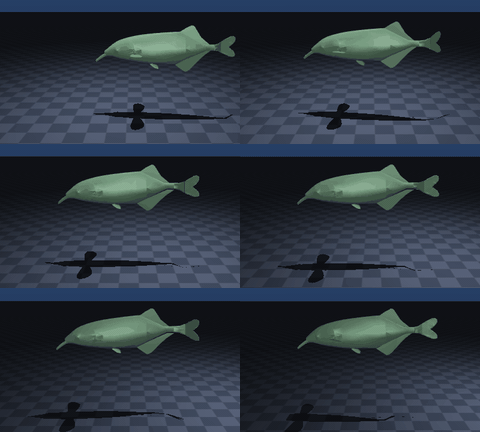
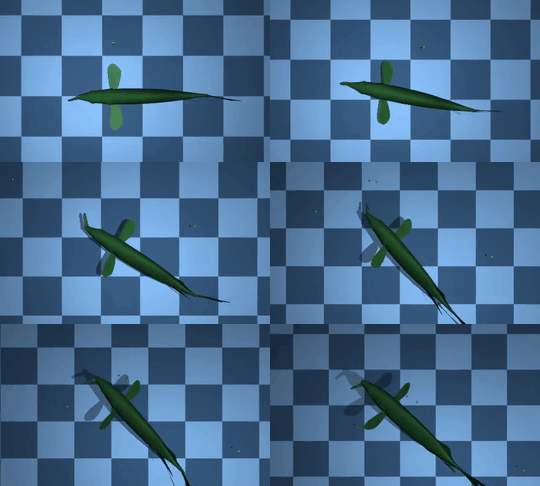
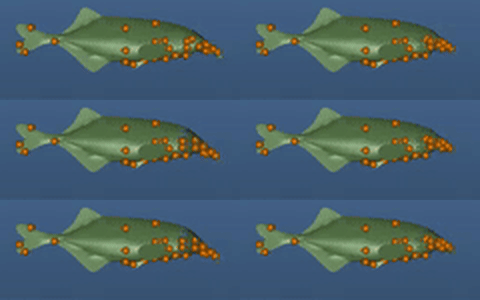
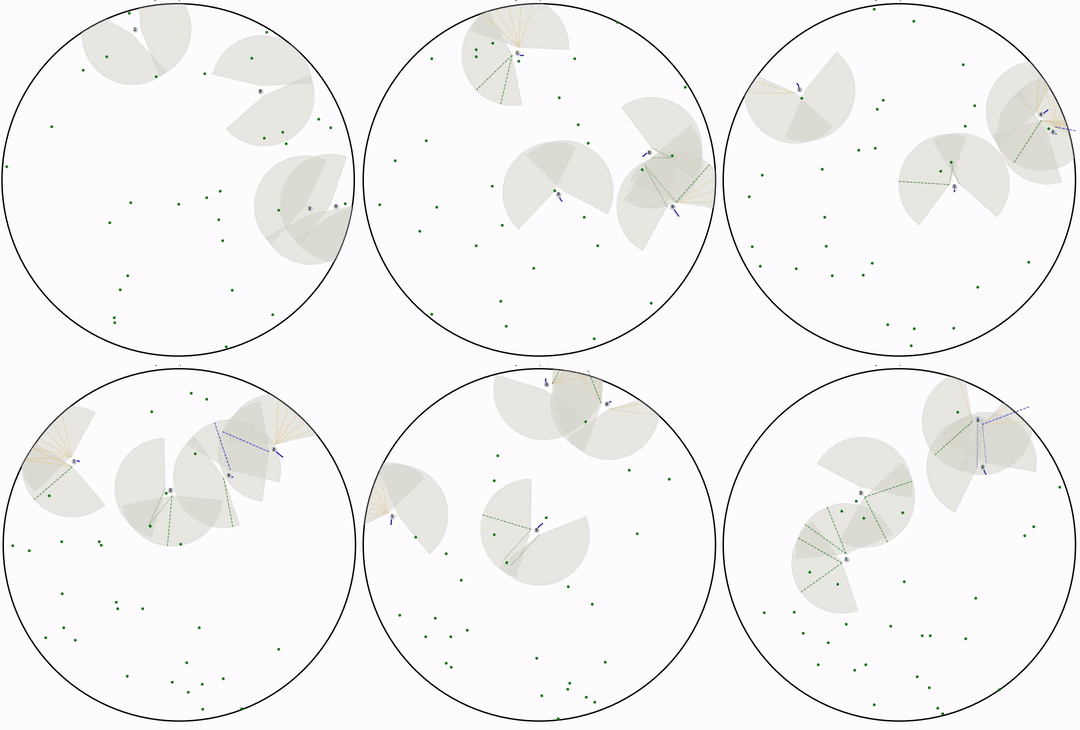
- Active Electrosensing & Collective Behavior — electrocommunication and social sensing in fish-inspired agents
Singh SH et al., “Active Electrosensing and Emergent Communication in Artificial Fish Collectives.” NeurIPS’25 AniComm Workshop (Paper) RLDM 2025 (Contributed Talk)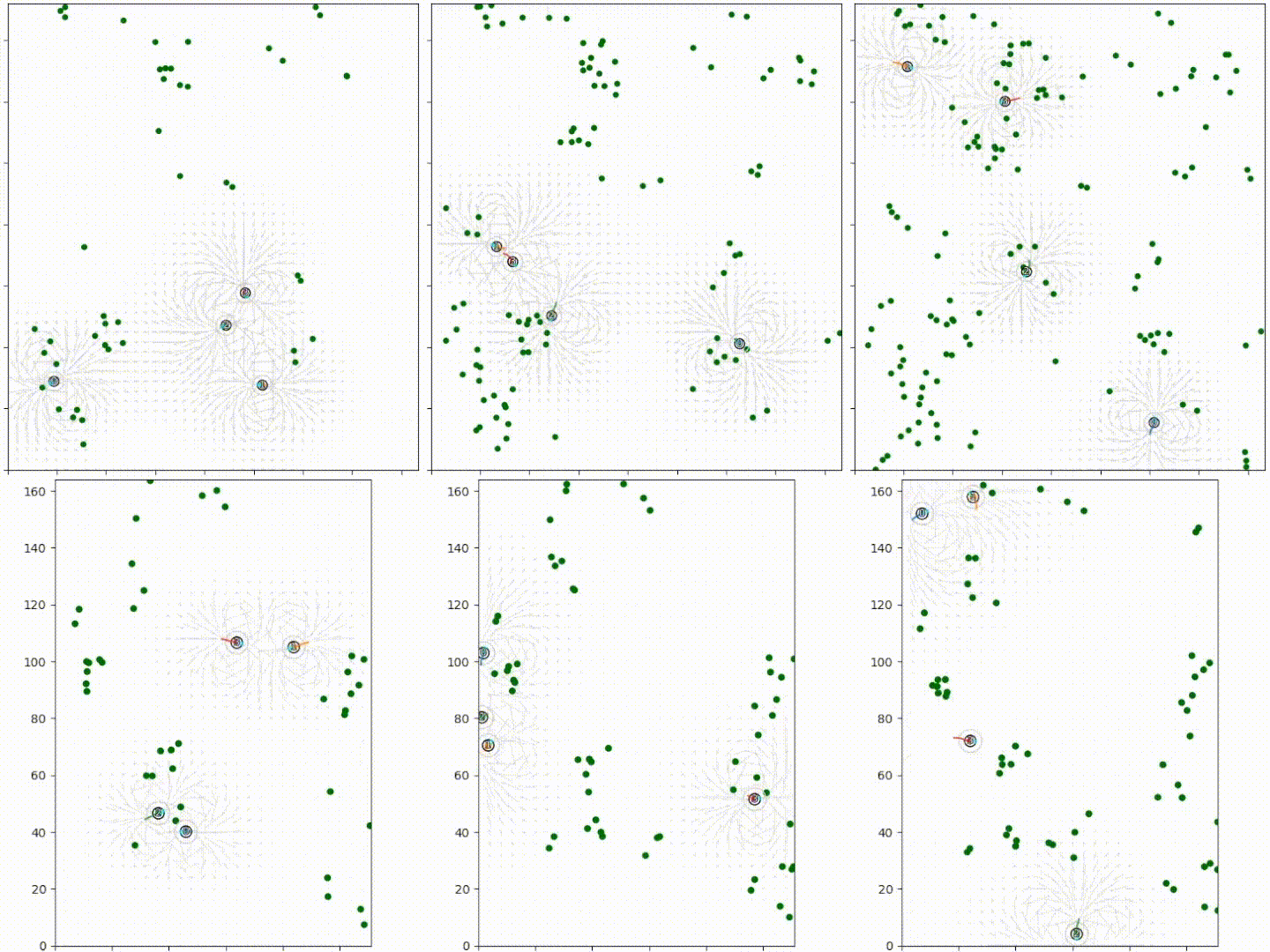
- RLC’24 Interpretable Policies Workshop — paper, TalkRL podcast
- Upcoming/Related:
- Proposal: Unsupervised Machine Translation of electro-communication with MARL
- Method: Physics-model based Source Separation (NeurIPS’25 AniComm Workshop)
- 3D Model
- Hunting in Zebrafish — DeepRL RNNs dissect larval hunting
Malik R, Singh SH, Johnson-Yu S, et al. (2025) “Dissecting Larval Zebrafish Hunting using Deep RL RNN Agents.”
NeurIPS 2025 AI4Science (Spotlight), Preprint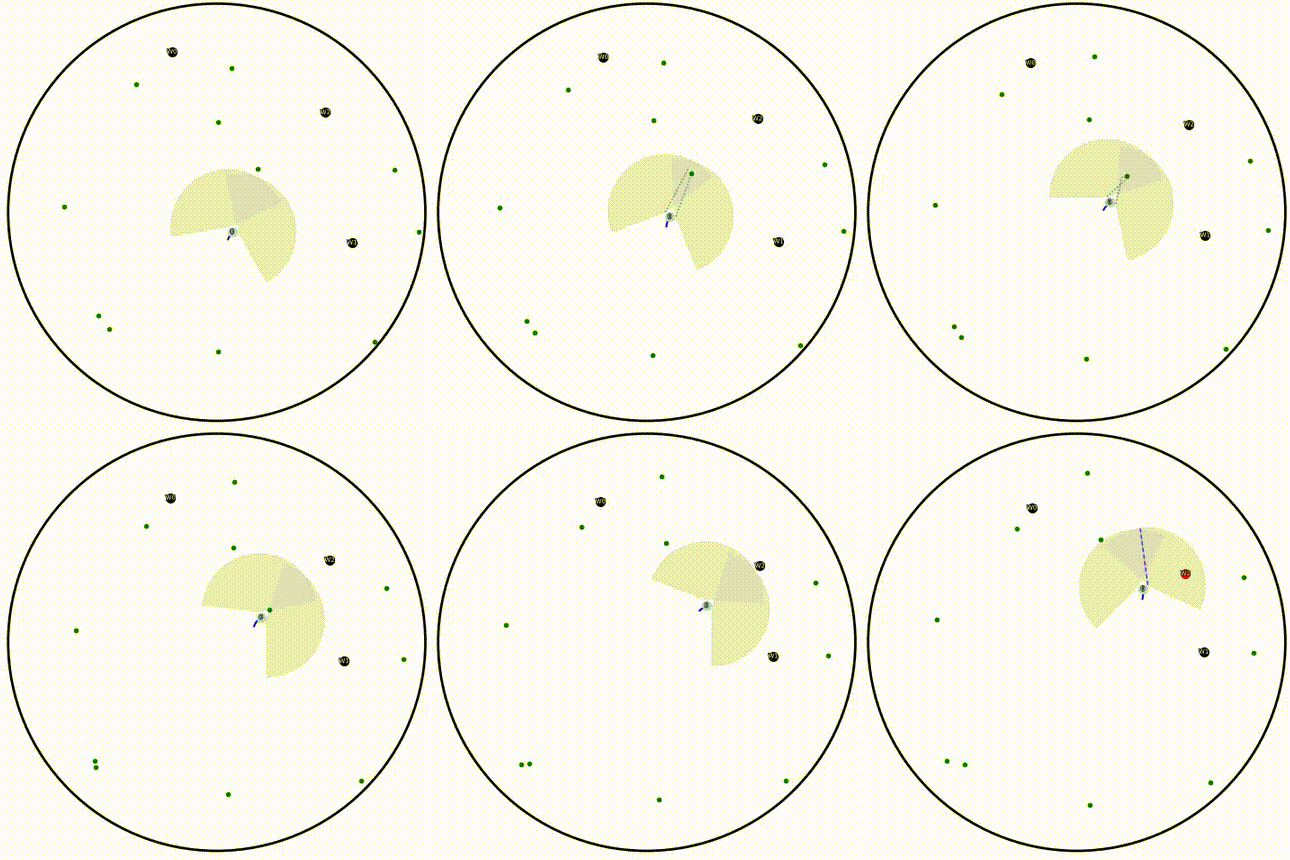
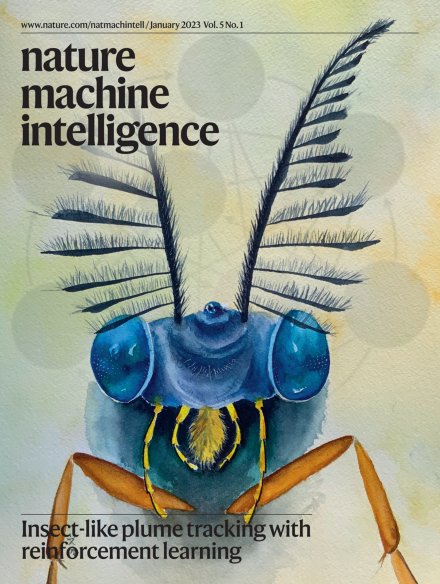
- Turbulent Plume Tracking Agents — insect-like navigation with DRL RNNs
Singh SH et al., Nature Machine Intelligence (2023) (Cover Feature)
Extras: More behavior+neural animations, Preprint, Tweeprint
Presented at: CoSyNe 2022, RLDM 2022, MAIN 2021, NAISys 2020, IROS 2020 Robot-Inspired Biology Workshop, ALIFE 2020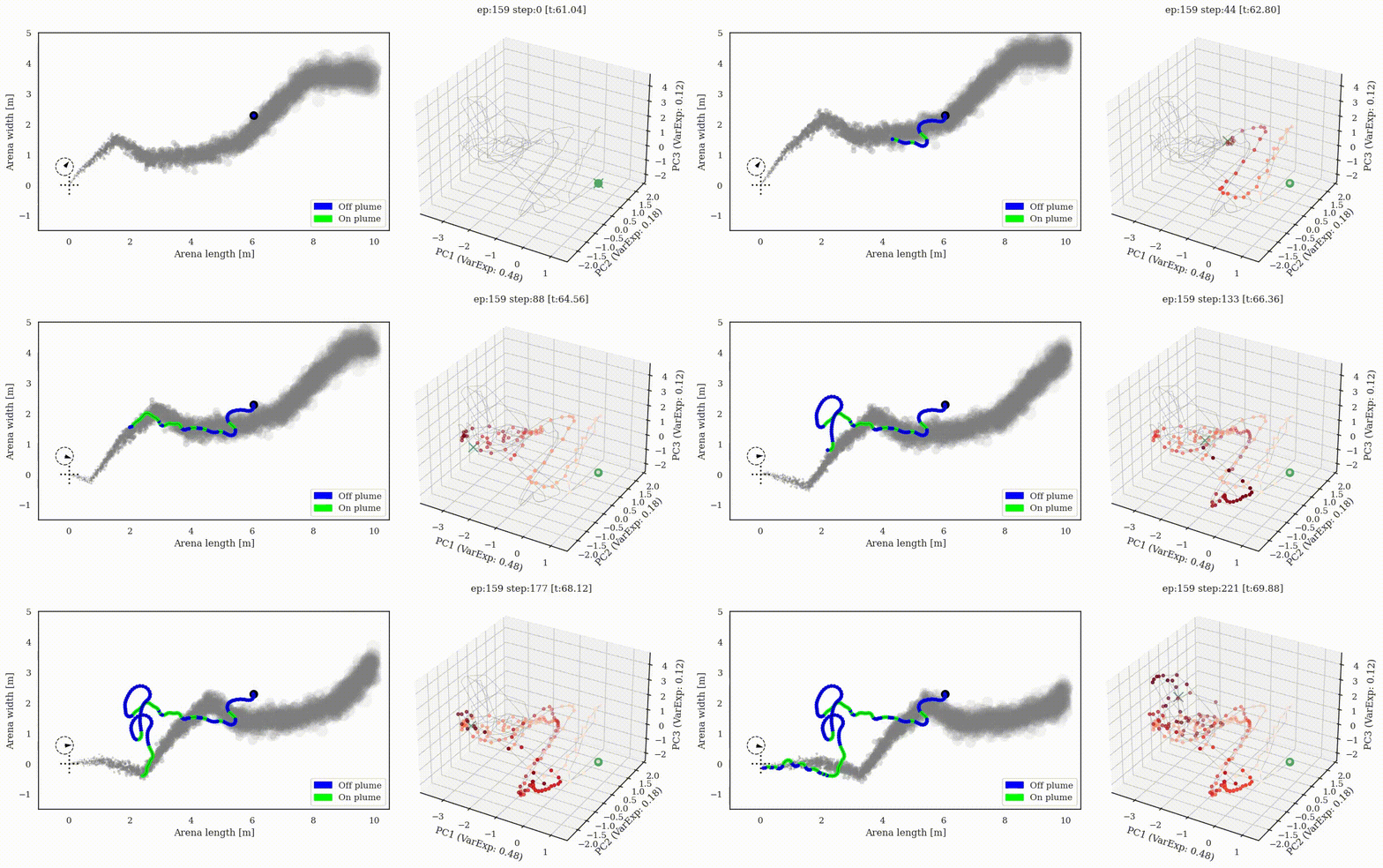
Featured as a canonical NeuroAI example in the Neuromatch NeuroAI Summer School intro lecture.
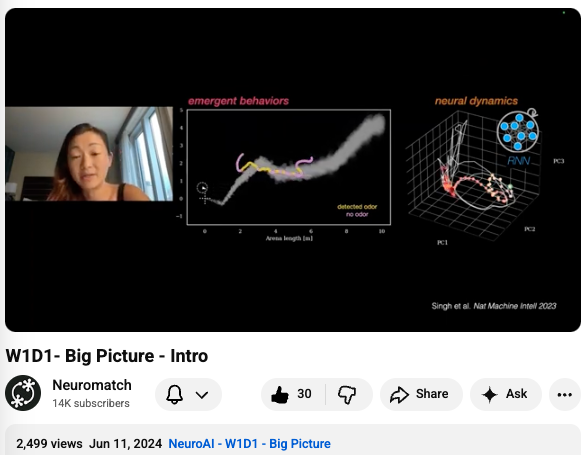
- Essay: Neuroprospecting with DeepRL agents - how Neuroscience can benefit from AI, and how AI can ‘prospect’ for algorithmic solutions to hard problems by studying nature Singh SH AI for Science Workshop, NeurIPS 2021
⚙️ Theory of Neural Networks & Agents: Dynamics, Degeneracy, Trust and Interpretability
Goal: Build a theoretical foundation to interpret, compare, and constrain Deep RL–trained RNNs through dynamical-systems and neuroscientific principles, advancing their trustworthiness, stability, and interpretability.
Solution Degeneracy in Task-Trained RNNs — control & quantify many-to-one solutions
Huang AH, Singh SH, Rajan K. (2025) NeurIPS 2025 (Spotlight)InputDSA — demix recurrent vs input-driven dynamics
Huang AH, Ostrow M, Singh SH, et al. CoSyNe 2026 (Spotlight Talk), ICLR 2026 (accepted) ArXiV — Demixing then Comparing Recurrent and Externally Driven DynamicsGeometry of Neural Dynamics in Controllers — learning-dynamics lens on RNNs
Huang AH, Singh SH, et al. (2024) RLC’24 Interpretable Policies Workshop (Talk) — paper, TalkRL podcast
🧬 AI for Biology and Medicine
Goal: Reliable, interpretable AI and simulation for clinical & biological questions.
- Naturalistic Motor Neuroscience — long-term neural + video; behavior mining
- Singh SH et al., J. Neuroscience Methods (2021) — article, preprint, code/data/videos
- Follow-ups: eNeuro (2021) (joint 1st), Nature Scientific Data (2022) (AJILE12 dataset), J. Neural Engineering (2021)
- AJILE12 used in Neuromatch Computational Neuroscience tutorial — Colab notebook

AI for Mental Health — RACER — auditable LLM analysis of semi-structured interviews
EMNLP 2024 NLP4Science Workshop — paperAI in Cardiology — ensemble based uncertainty quantification for pediatric ICU arrhythmia detection
Heart Rhythm O2 (2024) — PubMedMulti-Omic Cancer Progression (Myelodysplastic Syndrome) — liquid biopsy marker progression for MDS
Experimental Hematology (2024 abstract) — linkGRN Evolution — simulation study: promiscuity drives adaptation in GRNs
ALIFE 2023 — “Binding Affinity Distributions Drive Adaptation in GRN Evolution” paper- Cerenkov — positive + unlabled supervised learning for noncoding regulatory variome
ACM BCB 2017 — paper
🤖 Probabilistic and Bayesian Machine Learning
Goal: Uncertainty-aware and interpretable ML for real-world decision-making.
- Meta AI (Probability Team) — Uncertainty Quantification & Bayesian experimentation (2022)
Topics: Deep Ensembles, MC Dropout; Bayesian online experiments via Bean Machine
Team: Meta Probability
🧩 Other Projects and Patents
- NNMF Game — game-theoretic NNMF variant — arXiv (2021)
- MS Thesis (OSU, 2017) — microclimate cold-air pools; piecewise-linear model — thesis, animation
- Hydro-NEXRAD-2 — real-time radar-rainfall for hydrology — J. Hydroinformatics (2013)
- LinkedIn Data-Science Patents — matching, networking, growth — patents (Scholar)
